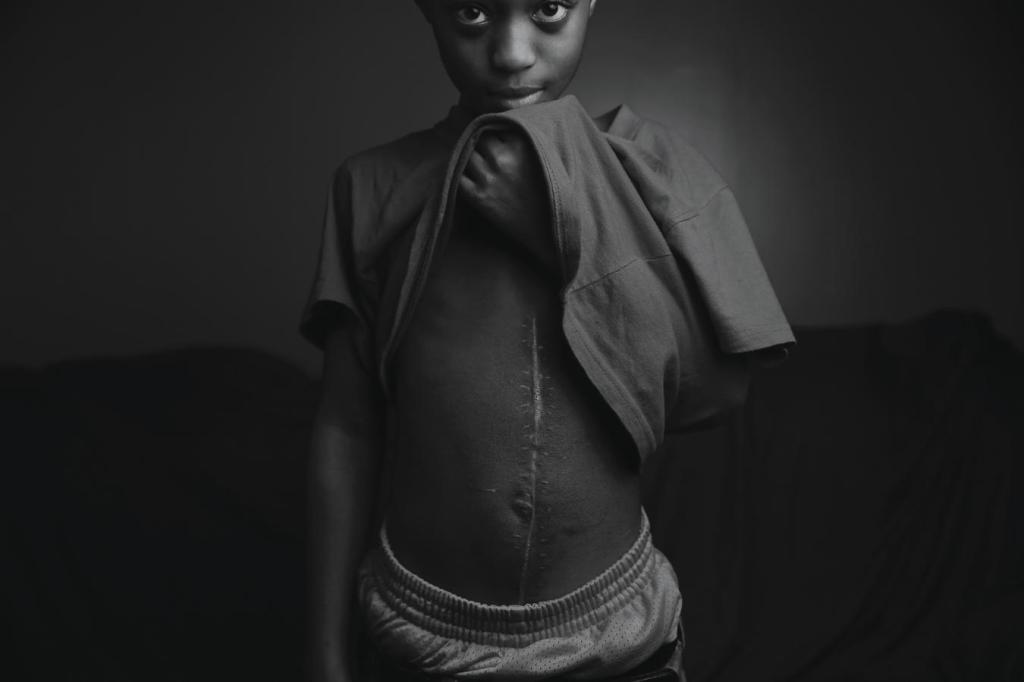
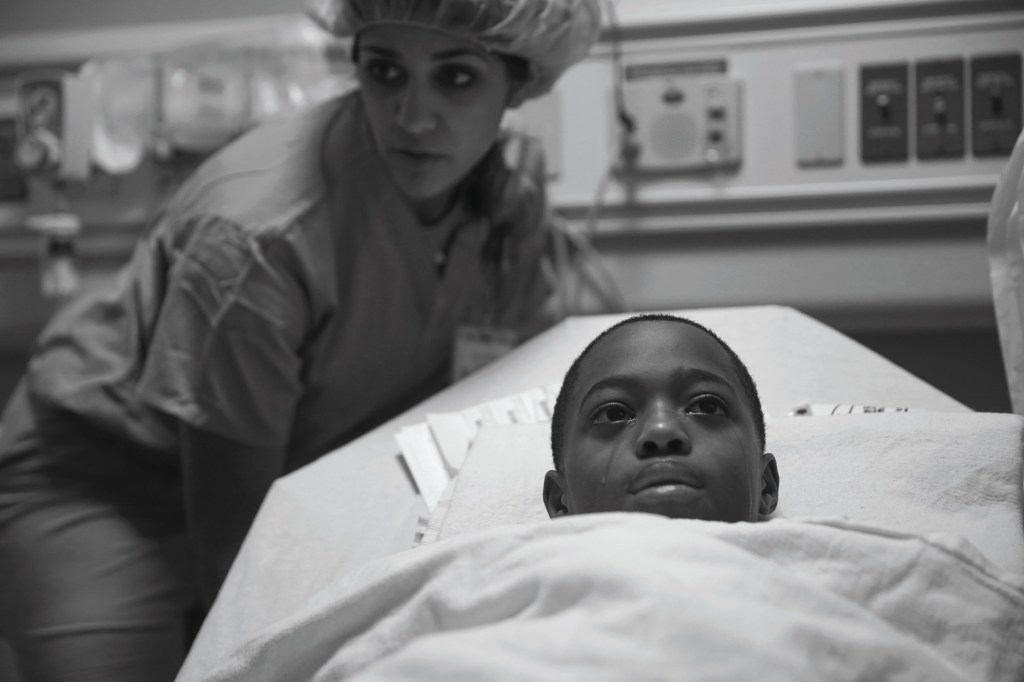
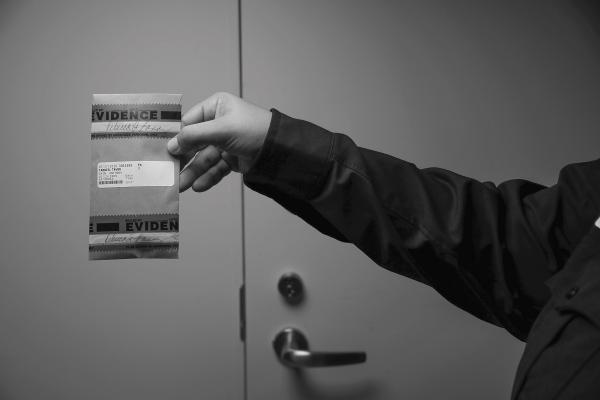
In Chicago 2016, Tavon Tanner was shot at his home, leaving a bullet lodged in his body for months. It had only been 2 months since Tavon had been shot when he met Chicago Tribune photographer E. Jason Wambsgans. Wambsgans at the time been working on a series of portraits containing children who had been shot in 2016. When the year came to an end there were 24 reported shooting where the target was under 12 years of age. The photo that first caught my attention was of Tavon lifting his shirt. In lifting his shirt Tavon reveals a large scar that goes from below the pant line to his sternum. This scar is from Tavon’s surgery to remove the bullet, which wasn’t taken out until more than 2 months after the shooting. The photo is in black and white creating a dark and eerie atmosphere, there is nothing in the background, and his forehead is cut off the photo. The beauty of this, in my opinion, is without a caption or knowing what happened you can still infer a lot about this photo. When Tavon goes to have the bullet removed E. Jason Wambsgans captures Tavon with a tear running down his face at the hospital as he is prepped to go into the operating room. This photo is also captured in black and white. Tavon is clearly the main focus but, we are able to see in the background a nurse a little bit blurred, no one is smiling, and Tavon looks scared. Tavon was even brave enough and asked to see the bullet that had been lodged inside him. Captured is a photo of the bullet being held in an evidence bag by an officer since the police needed it for evidence. Mary Schumich covered some of the writing for this story in the hope that people could see what happens to a family when a child is shot. Tavon and his mom Mellanie were one of the only people Schumich could get to talk but, gang affiliations kept many from talking. Mellanie stated that “Before, everything was in order. Since Tavon was shot, I’m completely lost.” She described how she felt at that moment in time saying how she remembered the bullets “seemed to come from nowhere, like the crack of thunder.” Wambsgans and Schumich being able to capture not only photographs of the aftermath and the pain that the family affected suffered but, they were able to talk to them one on one and then express on their behalf to others. This is a largely known problem in the US but, many while knowing it is going on do not see the months of recovery and the mental and physical trauma it put the whole family through. From capturing the scar going all the way down his stomach to the photo of him going in for surgery. The fear and sadness in his face are something a child that young should never have to experience and thanks to Tavon we all now are aware not only of the issue but, the outcome and recovery that this problem creates.
https://nppa.org/magazine/e-jason-wambsgans-pulitzer-photography
 S_Beck_com220